Publish Date
March 2026
Scotch Whisky Regions Explained: A Beginner's Guide

Tyler Berry
Whisky Collector
Scotland is a small country that produces an absurd variety of whisky. Two distilleries 20 miles apart can make spirits that taste like they come from different planets. The reason, mostly, is geography. Climate, water source, local tradition, and proximity to the sea all shape what ends up in the bottle.
Scotland's whisky-producing areas are divided into six recognised regions. Understanding them won't tell you everything about a whisky, but it gives you a useful starting framework for exploring what you like.
Speyside
Speyside is the most densely concentrated whisky-producing region in the world. More than half of Scotland's distilleries sit in or around the River Spey valley in the northeast Highlands.
Speyside whiskies are generally known for being elegant and approachable. Think fruit, honey, vanilla, and floral notes. Many are aged in sherry casks, which adds richness and dried fruit character. If you've tried Glenfiddich, Macallan, Glenlivet, or Aberlour, you've had Speyside.
This is where most people start their Scotch journey, and for good reason. The style is welcoming without being simple, and there's enormous variety within the region. A light, grassy Glenlivet and a rich, sherried Macallan are both Speyside, but they taste nothing alike.
Highland
The Highland region covers a vast area, essentially everything north of the line between Greenock and Dundee that isn't Speyside. Because it's so large, Highland whiskies vary widely. There's no single Highland style.
That said, you'll often find more body and structure than in Speyside. Notes of heather, dried fruit, toffee, and gentle spice are common. Some coastal Highland distilleries pick up a salty, maritime character. Glenmorangie, Dalmore, Oban, and Clynelish are all Highland.
If someone says they like "a good Highland malt," they could mean almost anything. It's the most diverse region, which makes it both the hardest to generalise and the most rewarding to explore.
Islay
Islay is a small island off Scotland's west coast with an outsized reputation. It's home to some of the world's most distinctive and polarising whiskies.
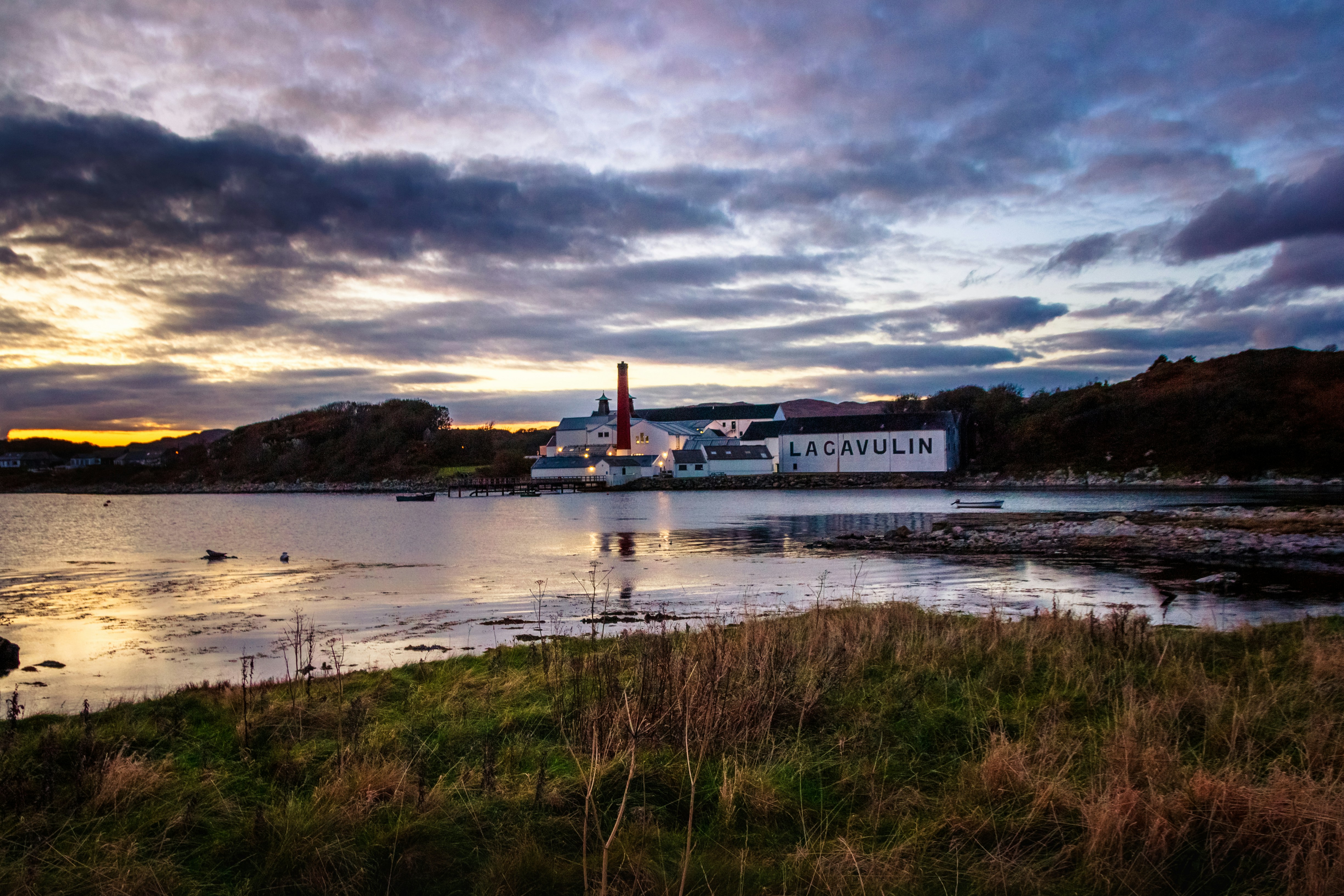
The defining characteristic is peat smoke. Islay malts are often intensely smoky, with notes of iodine, seaweed, brine, tar, and medicinal qualities. Laphroaig, Ardbeg, and Lagavulin are the classic examples, and they're not subtle. You either love them immediately or it takes a few tries. There's very little middle ground.
Not all Islay is heavily peated, though. Bunnahabhain and Bruichladdich (the unpeated expressions) show a gentler, more maritime side of the island. If someone tells you they don't like Islay, ask if they've tried the unpeated ones.
Lowland
The Lowland region covers the southern part of Scotland, below the Highland line. Historically it had very few active distilleries, though that's changing with new openings.
Lowland whiskies tend to be light, gentle, and malty. Grassy, citrus, and floral notes are common. They're often recommended as an entry point for people new to Scotch because they're easy-drinking and don't hit you with peat or heavy sherry influence.

Auchentoshan (known for triple distillation) and Glenkinchie are the best-known Lowland distilleries. If you find Highland or Islay whiskies too intense, Lowland is worth exploring.
Campbeltown
Campbeltown is a small town on the Kintyre peninsula that was once Scotland's whisky capital, home to over 30 distilleries. Today only three remain: Springbank, Glen Scotia, and Glengyle (which produces Kilkerran).
Despite its tiny size, Campbeltown punches well above its weight. The whiskies tend to be complex and characterful, with notes of salt, brine, fruit, and a gentle smokiness. Springbank in particular is one of the most respected distilleries in Scotland, and bottles from the town have a loyal and passionate following.
If you haven't tried anything from Campbeltown, you're missing one of Scotch whisky's best-kept secrets.
Islands
The Islands isn't an officially recognised region by the Scotch Whisky Association (it's technically part of the Highlands), but it's widely treated as a distinct category. It covers the whisky-producing islands other than Islay: Skye, Mull, Jura, Arran, and Orkney.
Island whiskies tend to share a maritime influence: salt, sea spray, and coastal character. Beyond that, they vary. Talisker (Skye) is peppery and smoky. Highland Park (Orkney) balances heather and honey with a gentle peat. Jura is lighter and more approachable. Arran has been making a name for itself with clean, fruity expressions.
The Islands category is a great playground for collectors because each distillery has a strong individual identity shaped by its specific island environment.
Regions are a starting point, not a rule
It's tempting to treat regions like strict flavour categories. "Islay = smoky, Speyside = sweet." And at a high level, that's a useful shorthand. But within every region there are distilleries that break the mould.
The best approach is to use regions as a starting point for exploration, not as a limit. If you enjoy an Islay malt, try another from a different Islay distillery. If you like Speyside, try a Highland to see what changes. Over time, your preferences will be shaped more by distillery and cask type than by region alone.
And that's where it gets really interesting.
Track your regional exploration
Cabinet tracks every bottle in your collection by region, so you can see at a glance how your shelf breaks down geographically. The stats dashboard shows your regional spread, and badges like Region Hopper (5 Scottish regions) and Complete Caledonia (all 6) reward you for exploring beyond your comfort zone.
Your taste profile maps what you enjoy across flavour dimensions that cut across regions. A Speyside sherried malt and an Islay sherried malt might score similarly on your profile even though they come from opposite ends of Scotland.
Start exploring the regions. It's free.